Why Do We Miss Things We No Longer Believe In?
What Diderot Taught Me About Longing for Religion


👉 What happens when belief fades but longing lingers? In this reflection, I trace my own unexpected yearning for religion through Denis Diderot, a radical Enlightenment thinker who, despite his atheism, missed what religion once offered. This is a story about doubt, memory, and what still pulls at us when the faith is gone. Have you ever felt something similar? Let’s talk about it in the comments. ⬇
A YouTube Video and an Unexpected Mirror
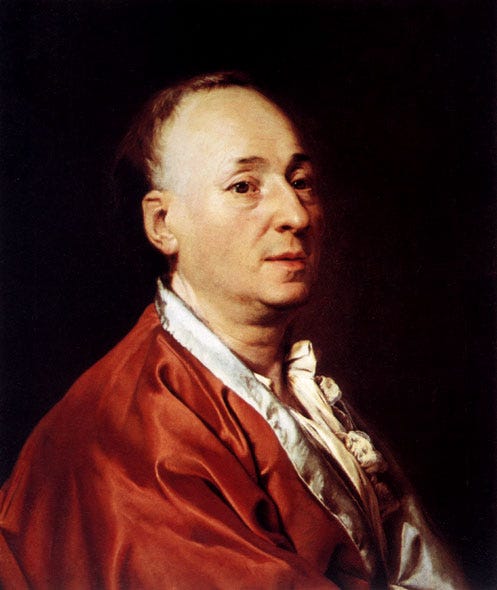
I didn’t expect a YouTube video to poke at something deep inside me. It was historian Philipp Blom discussing Denis Diderot, one of the great Enlightenment thinkers, a fierce critic of religion, and a radical materialist who believed the universe had no divine author. Nothing that surprised me, anyway.
🚩 But then Blom said something that made me stop: despite his public rejection of religion, Diderot still carried a wistful longing for what religion once provided: moral clarity, beauty, purpose, and transcendence.
He didn’t seem to doubt his critique of religion. What he did recognize was that religion had historically carried cultural and psychological weight that reason alone had not yet learned to replace.
That recognition raises a deeper philosophical question: if religion is no longer true for (a certain percentage of) us, can those human functions be replaced at all? And if so, by what?
💡 And I thought: “That line landed harder than I expected, because it named something I’d been circling for a while.”
What surprised me wasn’t the feeling itself but the realization that it didn’t feel uniquely mine. It felt socially familiar, almost patterned.
Psychologically, this makes sense: meaning systems formed early don’t simply disappear when beliefs change. They remain latent, reactivated by symbols, stories, and emotional cues.
It’s not that I see Diderot as a perfect parallel. But his inner conflict belongs to a wider philosophical lineage. Not because these thinkers shared the same conclusions, but because they shared the same problem: how to live meaningfully after the authority of religious metaphysics had collapsed.
📌Note: This is simply a personal reflection. I fully respect anyone’s beliefs. This isn’t meant as a critique of faith or a call to abandon it. Everyone walks their own path, and this is just a glimpse into mine.
Denis Diderot (1713–1784) was a French philosopher, writer, and art critic, best known for co-founding and editing the Encyclopédie. Over time, he moved from deism toward materialism, becoming one of the Enlightenment’s most uncompromising critics of religious authority.
Growing Up Catholic…and Letting It Fade
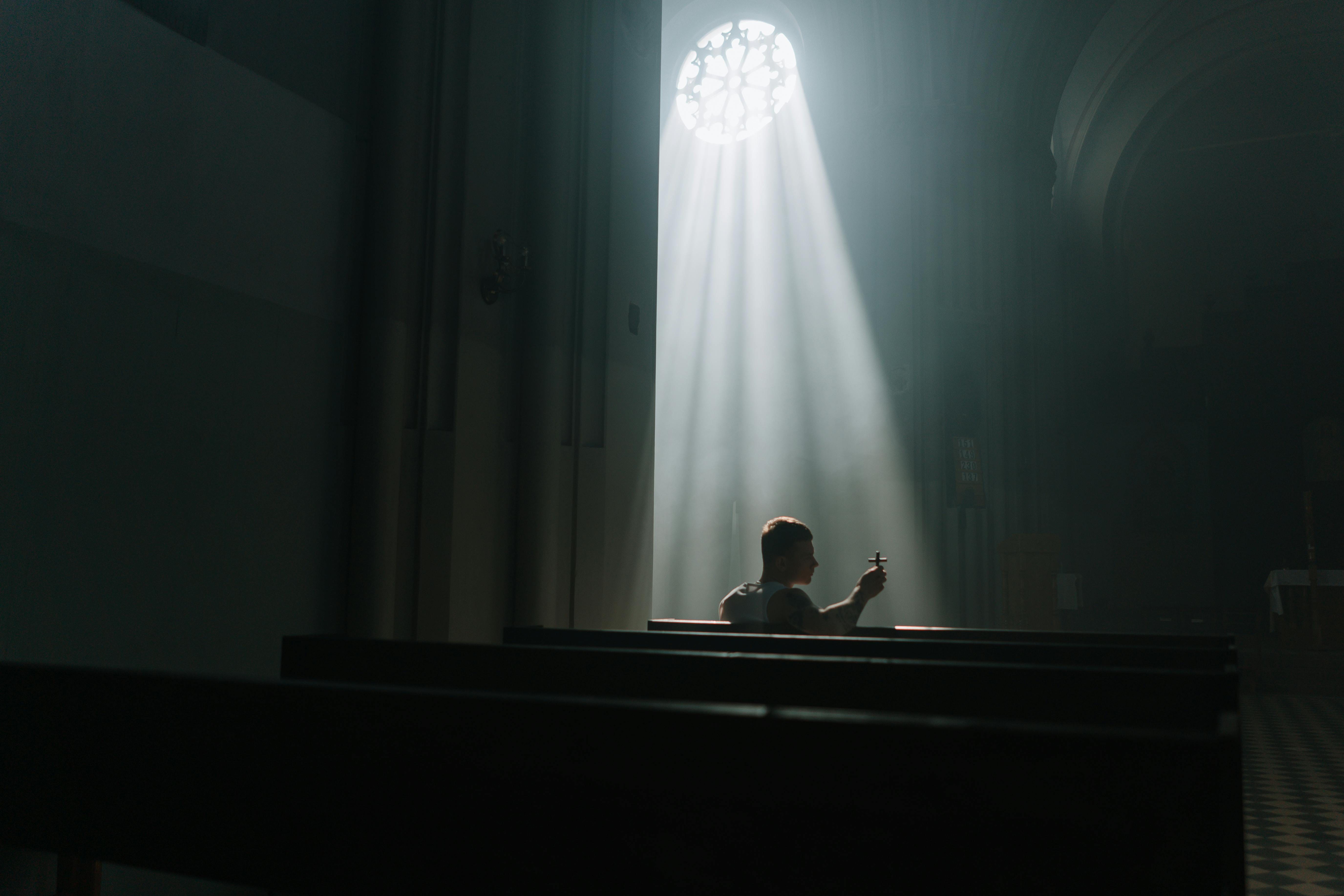
✝️ I was raised Catholic. The sacraments, holidays, and rituals were just part of my childhood’s rhythm. Belief wasn’t deeply internalized. The emotional scaffolding was. Long before belief becomes conceptual, it’s embodied, learned through repetition, safety, rhythm, and belonging. I went through the motions more than I questioned the meaning behind them.
🧪 Eventually, life grew more complicated, and belief faded quietly. There was no dramatic exit, no angry rejection. Just a slow drift toward agnosticism. Years of school and university had shaped me to see the world through a scientific, evidence-based lens, which made traditional faith feel increasingly distant. And when people very close to me - like my parents - died, it didn’t reinforce belief so much as deepen the questions. I didn’t feel like I had answers anymore, and I was skeptical of anyone who claimed to.
But recently, something I didn’t expect started happening. I found myself emotionally drawn to films about Catholicism: nuns wrestling with doubt, priests facing moral dilemmas, stories rich with symbolism and stained-glass beauty. Even horror movies featuring exorcisms, demons, and rituals began to captivate me, not for the scares, but for the strange familiarity and depth they carried. It wasn’t nostalgia, and it wasn’t belief.
Psychologically, these narratives work because they externalize moral struggle, guilt, redemption, and transcendence, experiences the mind still seeks even after the belief system that once framed them is gone.
Historians of secularization often note that belief fades faster than ritual, and ritual fades faster than emotional memory.
Part of the reason is simple: religion was never just a set of beliefs. It organized time, space, relationships, and moral expectations.
For believers, of course, these rituals aren’t merely functional; they are grounded in truth claims I no longer share.
What lingers longest is not doctrine, but atmosphere. The feeling that meaning was shared, not something you had to improvise alone.
🚩 It was something harder to define: a yearning for the emotional and existential weight that religion once carried. It wasn’t a desire to return to doctrine. It was more like missing the feeling of being part of something sacred. Knowing where I belonged and why it mattered.
To be clear, I’m not overlooking the pain and repression many associate with religion. I’m aware that the same institutions that offered meaning also wielded power - sometimes destructively.
It’s also worth saying this plainly: for many believers, religion isn’t a placeholder for meaning or a stand-in for something better. It’s not nostalgia. It’s not atmosphere. It’s a living framework they experience as true, sustaining, and morally serious. I don’t share those truth claims anymore, but I don’t think belief persists because people are naïve, uncritical, or afraid to let go. Faith endures because, for many, it still works. It still organizes life. It still answers questions that reason alone doesn’t always touch.

Diderot’s Rational Mind, Emotional Heart
That’s what connected me to Diderot. He began as a deist, believing in a distant, rational God. Over time, he moved toward materialism and atheism, convinced that everything could be explained by natural laws.
➡️ And yet, even at the height of his skepticism, Diderot didn’t ignore the emotional function religion served.
✅ He admired its art.
✅ He respected its ability to create community.
✅ He acknowledged that people needed something larger than themselves, even if that “something” wasn’t supernatural.
📖 In works like Rameau’s Nephew, you can hear the tension in his writing: reason vs. meaning. He saw that life stripped of faith could become emotionally impoverished. Not because disbelief is psychologically deficient, but because people still need meaning, coherence, and orientation meaning, coherence, and orientation - regardless of metaphysical belief. And he never quite solved that problem. Neither have I. And honestly, I seem to suffer less under its weight than he did.
🚩 That might be the point: it’s not about solving the tension, but acknowledging it honestly. That space between disbelief and yearning is deeply human, and Diderot reminds us it’s okay to live there.
What Diderot experienced at the level of personal reflection, most people experience at the level of everyday life. As religion loosened its grip on institutions, its functions didn’t disappear. They fragmented. What was once collectively supplied became something individuals were quietly expected to assemble on their own.
What We Lose When We Let Go of Belief
There’s a modern assumption that once you give up belief, you stop needing what it offered. That if you no longer believe in God, you’re fine without the community, the transcendence, the rituals.
But this assumption quietly collapses belief into meaning. Rejecting metaphysical claims does not dissolve the existential and social needs those claims once organized.
Historically, this assumption is very recent. Most premodern societies treated meaning as something inherited collectively, not constructed individually. That’s why its sudden privatization can feel less like freedom and more like exposure.
When meaning becomes private, failure becomes private too. There’s no shared language for loss, doubt, or moral struggle, only personal coping. What once felt like a collective crisis now registers as individual weakness.
Psychologically, this shift increases shame, self-blame, and existential anxiety. Without shared frameworks, distress feels personal rather than situational. Something wrong with me, not something difficult about being human.
➡️ But human psychology doesn’t update like software. You don’t drop faith and instantly replace it with logic and expect everything to run smoothly.
🚩 The emotional needs remain. The desire for connection, for sacredness, for shared meaning. They don’t vanish. They just drift, unresolved.
What also remains unresolved is the question of moral grounding - not just how we feel, but why certain actions still obligate us when divine authority is gone.
Sociologically, this isn’t just a philosophical puzzle. Shared moral frameworks are what allow societies to coordinate trust, responsibility, and obligation at scale.
❌ Of course, not everyone who leaves religion feels this way. Some people feel relief. But for others, the absence leaves an emotional echo.
✅ Diderot understood this. He didn’t believe in God, but he missed what belief made possible. And in a quiet, personal way, I think he mourned it.
✅ So do I. Not because I want to return to belief, but because I recognize what it once offered.
I’m not alone in this tension. Others have felt it too: from Albert Camus searching for dignity without God, to modern philosophers like Charles Taylor who argue that even in secular societies, the longing for transcendence and fullness remains built into being human.
📌 That doesn’t mean we’re glorifying the past or advocating for a belief we no longer hold. It simply means we’re recognizing a vacuum that rationality alone may not fill. So the question becomes how to meet those needs authentically.
🚩 In a time when traditional institutions feel weaker than they used to and meaning feels increasingly privatized, that question becomes urgent - not just personal. If religion can’t serve that role for many of us anymore, the open question is what other institutions or practices might help anchor community, ethics, and awe.

What Now? Living With the Longing
The goal here isn’t constant fulfillment or emotional certainty. Psychologically, we don’t need permanent meaning. We just need enough coherence to act, care, and endure uncertainty.
The danger is obvious: that meaning becomes purely private, aesthetic, and optional. But abandoning shared belief does not require abandoning shared responsibility.
The challenge, sociologically, is finding ways for such practices to become visible and shared again, not merely personal, but socially reinforcing.
⚡ So what do we do - those of us who no longer believe but still feel the ache?
🚩 The answer, in my opinion, isn’t to force belief back into our lives. It’s to recognize what we’re truly longing for and find new ways to meet those needs.
👉 Here’s what I’ve tried so far. If you recognize the feeling, maybe one of these will help:
1️⃣ Let the longing be real.
Don’t feel like it has to lead somewhere. It doesn’t mean you’re secretly religious. It just means you’re human. Longing is often wiser than certainty.
2️⃣ Seek awe on your own terms.
Religion once gave us cathedrals, choirs, and candles. You can still find that sense of awe in nature, in music, in philosophy, in the silence of your own thoughts.
3️⃣ Make space for ritual.
Light a candle. Read a poem at the same time each week. Walk the same path in the woods every Sunday. The form matters less than the intention. This isn’t cosplay or mimicry. It’s not about pretending to be religious. It’s about designing meaning - being intentional about how we create moments that ground us.
4️⃣ Build your own moral framework.
You don’t need commandments to know what’s right. But moral frameworks still have to be internalized through practice, reflection, and feedback. They don’t emerge automatically once belief is gone. That requires reflection, empathy, and an internal compass that’s revisited regularly.
5️⃣ Talk about it.
There are more of us than you think - people who’ve left belief behind but still feel the gravity of what it once gave. Share your story. You might help someone name a feeling they couldn’t yet describe.
✨ This longing isn’t just a private feeling. It speaks to a broader cultural challenge: how do we create shared meaning, community, and moral structure in an increasingly secular, fragmented world?

Wisdom in the Tension
❌ The story of Diderot, and maybe the story of many of us, is about living with a split screen: reason in one hand, longing in the other.
☑ It’s about learning to live in the space between them.
☑ To hold both clarity and longing.
☑ To understand that rejecting the metaphysics of religion doesn’t mean rejecting the emotional architecture it once provided.
🔺 We may never go back to belief.
🔺 But we don’t have to ignore the ache it leaves behind.
🔺 And maybe that ache is part of what makes us whole.
🔺 Maybe this ache isn’t just personal, it’s cultural.
🔺 Maybe part of our work now, in this post-religious moment, is to take that longing seriously. Not to rebuild the past, but to design a future where meaning, connection, and purpose remain possible. We’re inheritors of the Enlightenment, not its enemies. That inheritance comes with responsibility: critique, yes, but also reconstruction.
If that’s true, then the task before us isn’t self-fulfillment, but social invention: creating forms of meaning that can once again be shared, sustained, and transmitted.
Psychologically, the presence of longing may be a sign of engagement. Numbness or total indifference can sometimes signal something else entirely.
☑ So, yep, we don’t need to believe again. But we do need to listen to the emotional echoes that belief left behind, and build something new with them.
⚡ What is it you still long for, even after belief is gone?
👉 I’d love to know how this lands with you. Have you ever felt that quiet pull toward something you no longer believe in? Share your thoughts in the comments. Let’s explore this together. ⬇
A Note to Theologians (and to Myself):
A theologian might reasonably object at this point: “you are treating religion as something that can be functionally analyzed and selectively reconstructed, while theology insists that its truth claims are inseparable from its formative power.” From within faith, ritual, moral obligation, and meaning are not design problems to be solved. They are responses to what is experienced as real.
That’s a fair critique. And I want to acknowledge it explicitly.
From my side, the hesitation isn’t about dismissing those truth claims as childish or false by default. It’s about intellectual honesty. I no longer experience those metaphysical claims as compelling in the way belief requires. What remains accessible to me is not revelation, but resonance. Not assent, but recognition. That places me, unavoidably, on the outside of theology proper.
But here’s the part where I think the disagreement is often misunderstood.
Recognizing the functions of religion is not the same as reducing faith to utility. It’s an attempt to take seriously the human realities that belief once organized, especially for those of us who can no longer inhabit the belief itself. From the inside, faith is not optional. From the outside, its absence still has consequences.
Theological traditions might say the task is receptivity, not reconstruction. I respect that. For those who believe, that may be exactly right. But for those who don’t, receptivity without belief risks becoming self-deception. The challenge, then, is not to pretend belief back into existence, but to ask what moral seriousness, shared responsibility, and transcendence look like without metaphysical certainty.
This is not an argument against faith. It’s an argument against pretending that disbelief dissolves the needs faith once met.
If theology insists that truth cannot be detached from formation, secular life still has to explain what happens when formation collapses while truth claims no longer persuade. That gap isn’t a refutation of religion. It’s a condition of modern life.
And perhaps this is where the conversation can remain open rather than adversarial. Theology reminds us that meaning was never meant to be improvised alone. Secular reflection reminds us that belief cannot be willed into being on command. Between those two insights lies a shared concern: how humans orient themselves morally, emotionally, and socially when the old frameworks weaken.
That tension doesn’t need to be resolved to be respected. It only needs to be taken seriously.
Sources & Links
If this resonated with you, consider subscribing to receive more insights like these straight to your inbox. Together, we can continue the conversation and shape the future on our own terms.
The views expressed here are entirely my own. This newsletter is not affiliated with any organization, and no confidential or non-public information is shared.