Losing Touch with Analog Reality: A Digital Dilemma
What It Means to Live Without Analog Experience

👉 In a world ruled by screens and algorithms, are we quietly losing something essential — our sense of the real? I keep wondering what it means to live without tactile, messy, unfiltered moments. What do you think? ⬇
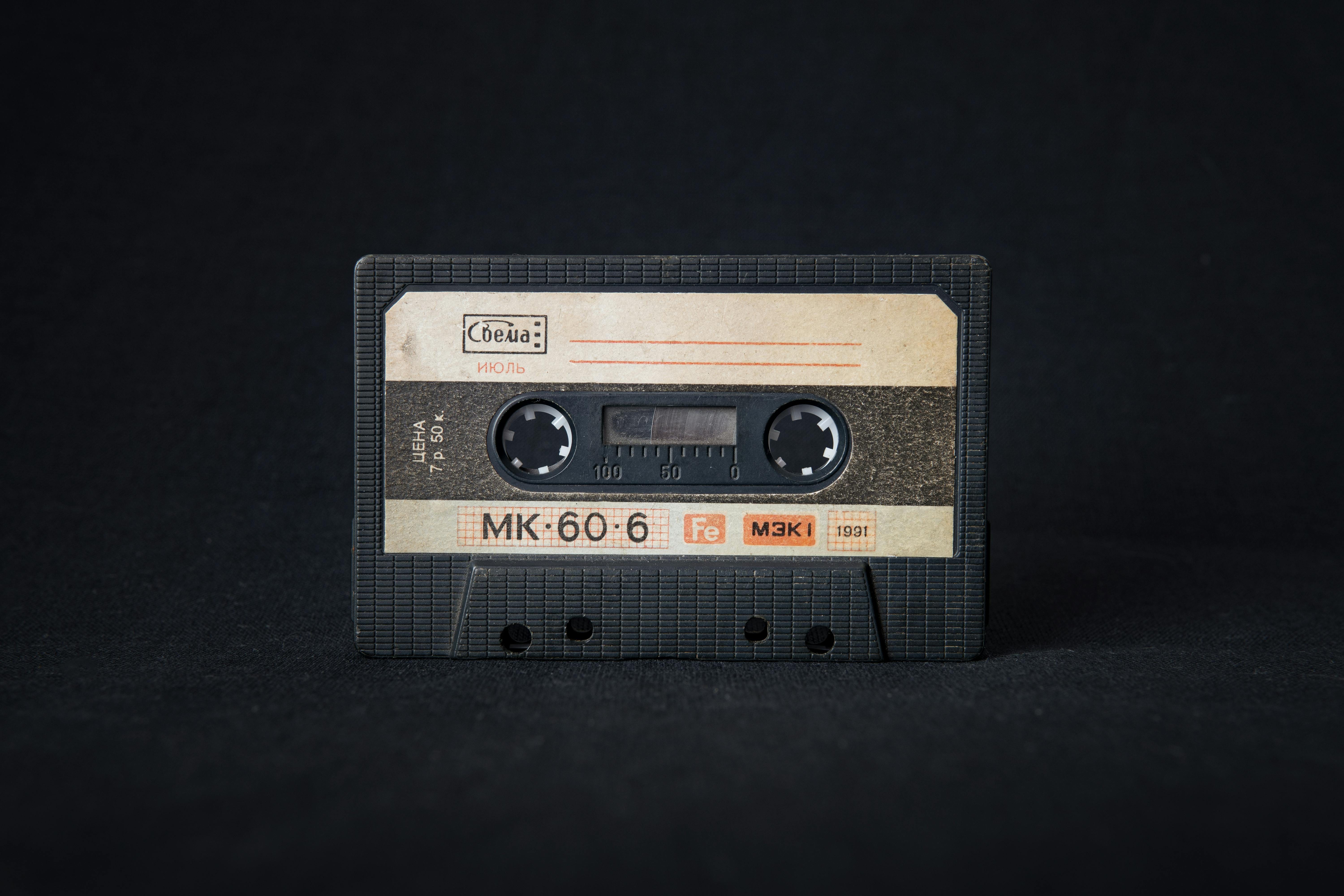
Imagine waking up in a world where no one remembers the feel of a dusty book, the patience of waiting for film to develop, or the sharp click of a cassette snapping shut. I picture myself opening an old photo album, pages sticking slightly, and feeling a sudden rush of warmth I can’t quite name.
What happens when an entire generation grows up without ever knowing the analog world?
For the first time in history, humanity faces this question. We’ve never faced this question before, and the ripple effects could reshape how we see ourselves.
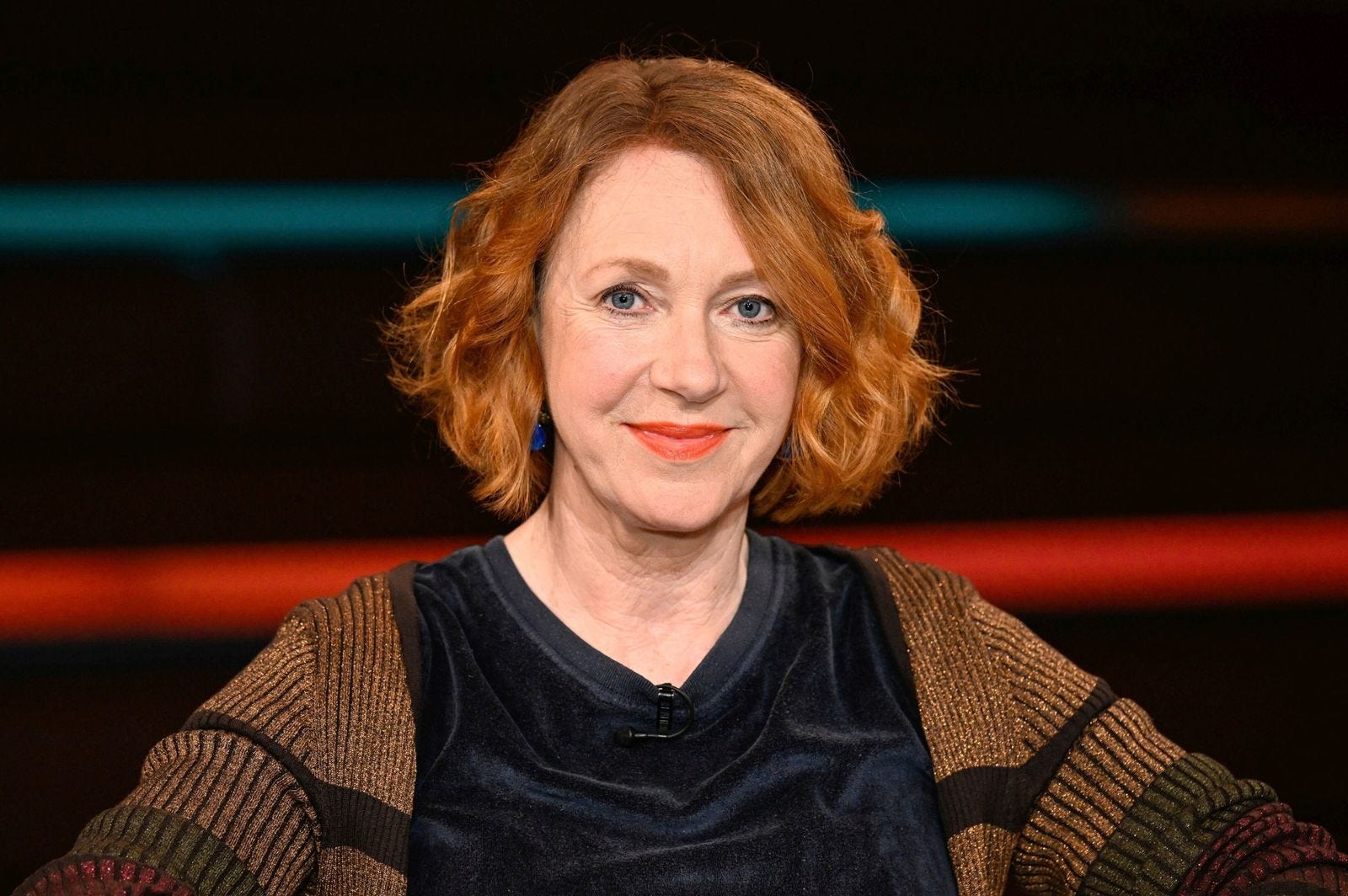
💡This essay grew out of a German-language video titled In 2 Years, Everything Will Be Different – Prof. Guérot Warns About the AI Future!. Watching it left me unsettled. Professor Ulrike Guérot explores how AI and digital systems are reshaping our sense of reality, eroding critical thinking, and even loosening our grip on what it means to be human. Her warnings gave me a sharp lens to look through while thinking about what gets lost when we abandon the analog world.
Professor Ulrike Guérot is a German political scientist and author known for her sharp critiques of modern governance and digital systems. Her work blends philosophy with present-day politics, especially around democracy, European integration, and the impact of globalization. She often writes with a reflective, questioning tone that pushes readers to rethink the systems they live in.
When Digital Swallowed the Real
To younger generations, the analog world isn’t fading. It never even arrived. They were born into glowing screens and endless connectivity. What they know best isn’t what’s real, but what’s rendered.
Most kids today wouldn’t know the feel of vinyl from the feel of paper. They’ve never smudged ink across a page or run their fingers over paper worn soft from years of turning. Analog life was messy. And that was the point.
Now those messy moments are getting paved over by polished digital spaces. Analog experience is being replaced by tailored digital spaces that shape our views, beliefs, and even desires. And the more connected we are, the more alone we feel.
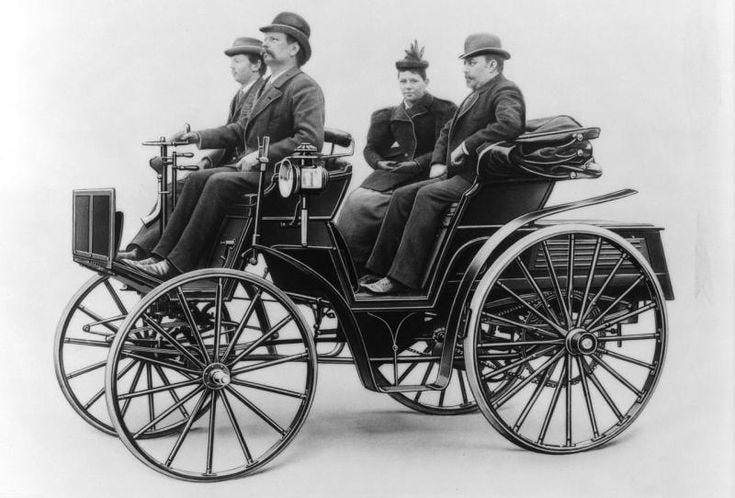
🚘My father once told me how my great-grandmother remembered seeing the first cars rumble down her street. It must have been the 1890s or early 1900s. She said they felt like more than machines — like the world itself was shifting under her feet. For her, these machines weren’t just a marvel: they symbolized the turning of an age.
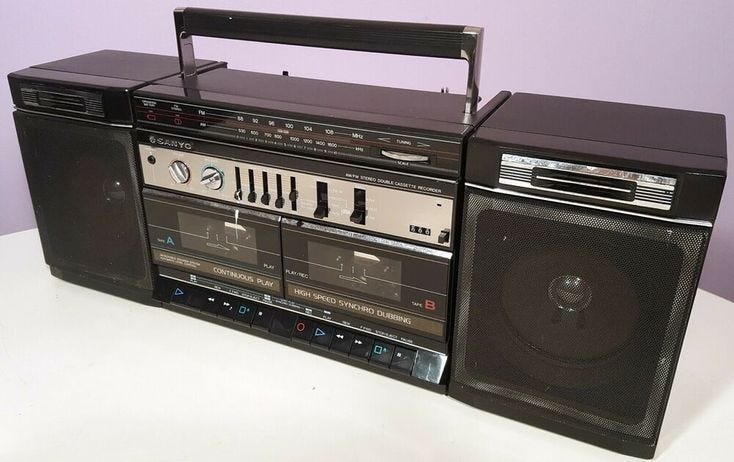
I sometimes wonder if my wife and I will play a similar role in our family’s history. Will our kids, or their kids, talk about us as the ones who still remember life before the internet, the ones who taped songs off the radio? 📻 I can still see my old boombox, finger hovering over “Record”, waiting for the DJ to stop talking. Copying tapes on the double deck felt like a ritual, and I’d give each one a name: half for fun, half because it made them feel like they were mine.
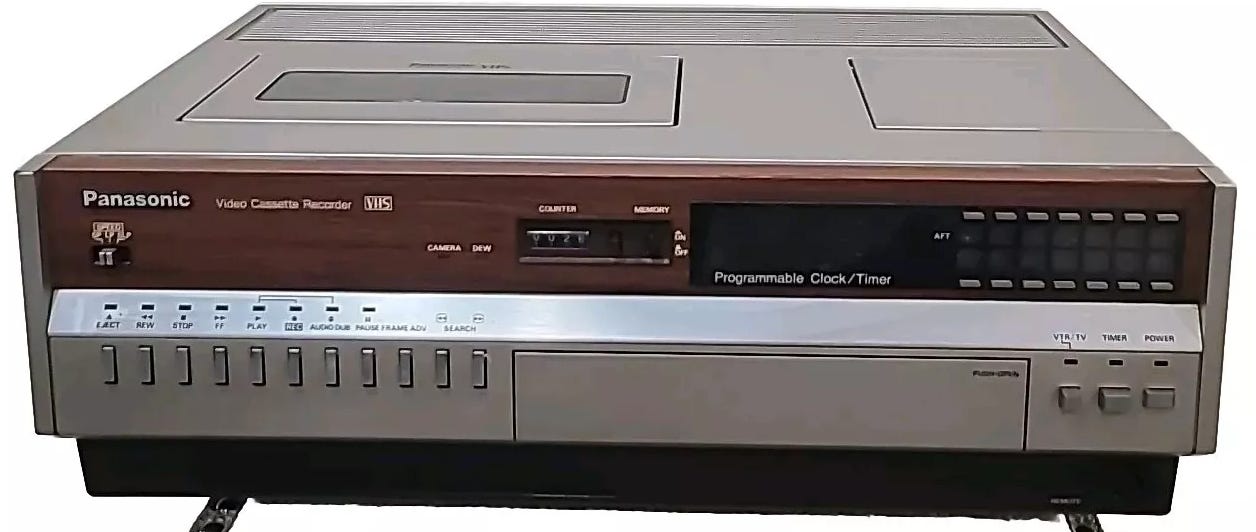
I still remember the thrill of getting our first top-loading VCR in the early ’80s. The magic of recording shows and watching them again whenever we wanted. And the smell of it. Isn’t that wild? Those old machines had springs and pulleys greased up inside, and when they warmed, they gave off this faint oily scent. Even now, I can almost smell it.
📌Smells have an extraordinary ability to trigger memories, and you’ve likely experienced it: a certain scent immediately transports you to a specific moment in your life, rich with emotions and context. This phenomenon happens because smells bypass the brain's "relay center" (the thalamus) and connect directly to the olfactory bulb, which is closely linked to the amygdala (responsible for processing emotions) and the hippocampus (key to memory formation). This direct connection, known as the Olfactory Pathway, forms a powerful and immediate bond between smells, emotions, and memories. Of course, I had to look this up.
📌Building on this biological mechanism is the Proustian Effect, named after a passage in Marcel Proust’s In Search of Lost Time. It describes the psychological experience of vividly reliving memories triggered by specific smells. For instance, the scent of a childhood home, a loved one’s perfume, or even the distinct aroma of an old VCR can instantly transport you to a precise moment, as though no time has passed. Together, the Olfactory Pathway and the Proustian Effect explain why smells are such potent memory cues. Of course, I had to look this up, too.
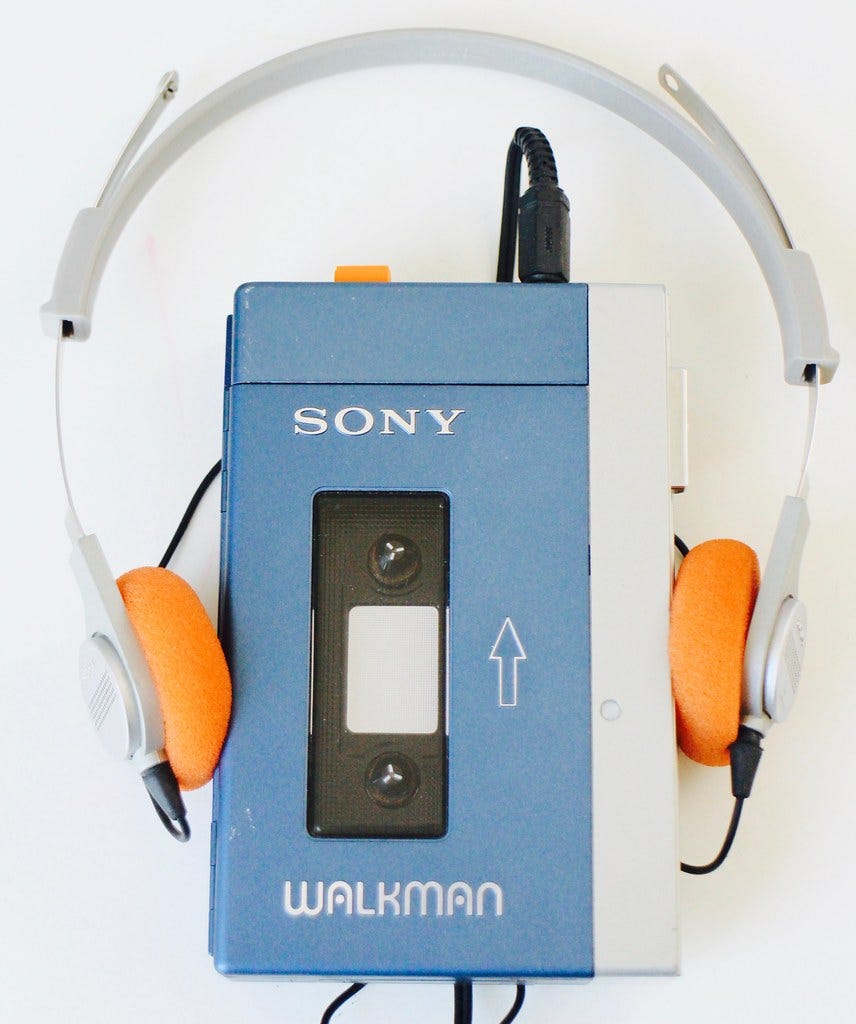
Gosh, now that I think about it, I also remember my first Sony Walkman. It felt like magic to me.

For my kids or grandkids, that analog world may seem as distant and fascinating as horse-drawn carriages did to my parents while my great-grandmother remembered them vividly.
⚠But let’s not romanticize the analog too much. Every generation experiences technological shifts, and with them comes a blend of progress and loss. While my great-grandmother marveled at automobiles, others lamented the decline of horse-drawn travel, unaware of the opportunities cars would bring. Today’s digital transformations may feel disruptive, but they also open doors we’ve only begun to explore. Recognizing this balance is key.
🚩Still, not everyone gets to choose between analog and digital. Some communities don’t have reliable internet. Others can’t afford hobbies like film photography or vinyl records. If we want kids to grow up with both worlds, we have to make room for it by building better internet access in underserved areas and slipping a few real notebooks or cheap film cameras into classrooms. It might sound dramatic, but losing our link to the analog would be a real loss. Those tactile, clumsy moments teach patience, imperfection, and connection…things digital life often forgets.
The Erosion of Thinking
One significant cost is the atrophy of critical thinking. 🧠Analog worlds required patience: rewinding a VHS tape, waiting for photos to develop, or crafting a letter by hand.⏳These processes invited reflection and demanded effort.
In the digital age, immediacy replaces depth, and context is compressed into hashtags and soundbites.
Digital life simplifies. Digital life polarizes. Digital life erases nuance.
🪞Or, in other words, digital life is like a mirror that only reflects what we want to see, but never the whole picture.
Are we sacrificing meaningful dialogue for the sake of speed?
In a world of Instagram filters, are we losing the beauty of unfiltered reality?
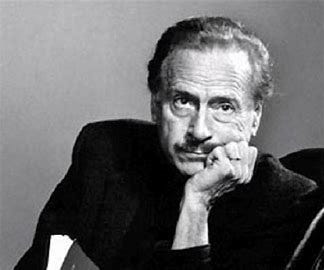
Worse, digital algorithms thrive on binaries. As media theorist Marshall McLuhan famously argued in his 1964 book Understanding Media: The Extensions of Man: “The medium is the message.” If our medium is digital (structured on zeros and ones), then it thrives on polarization. Nuance disappears, replaced by echo chambers that reinforce existing biases. Analog experiences, on the other hand, often embraced complexity: the grain of a black-and-white photo, the scratch of a vinyl record, or the physicality of handwritten notes. OK, this might sound a bit forced or even superficial, but I’d still invite you to sit with the thought for a moment because how we experience the world shapes how we think about it.
It sometimes feels like critical thinking is slipping away, drowned out by the constant rush of digital immediacy. Still, you can see sparks of “resistance”: young people picking up vinyl records, scribbling in journals, even shooting on film again. It’s as if something in them still craves the slower, hands-on kind of attention that screens can’t offer. Maybe the best thing we can do is notice those moments and nudge them along.
📌It’s also worth remembering that younger generations aren’t just passive victims of digital tools. They’re often the ones reshaping what those tools can do. I’ve seen them use technology to rally people around causes, build new creative spaces, and tackle problems that feel impossible to older generations. From organizing movements on social media to coding fixes for real-world issues, they’ve shown a mix of ingenuity and grit that’s easy to overlook.
☢️And the research backs up why balance matters. Too much screen time can chip away at mental health and critical thinking, while analog activities seem to do the opposite: sharpening focus, memory, and creativity. One Princeton study even found that students who took handwritten notes remembered more than those who typed. It’s a small reminder that the slower, hands-on way of doing things still has power in a digital age.
Mueller, P. A., & Oppenheimer, D. M. (2014). The Pen Is Mightier Than the Keyboard: Advantages of Longhand Over Laptop Note Taking. Psychological Science, 25(6), 1159–1168. Link: Psychological-Science-2014-Mueller-0956797614524581-1u0h0yu.pdf
Lessons for the Digital Age
Philosophy can be a surprisingly useful compass when we’re trying to make sense of digital change. It offers old frameworks we can borrow to think through the messy, fast-moving world we live in now. Just to give you a taste, here are two high-level examples that show how it can help us look at things differently. I won’t go too deep into them here, though, as this piece is really about practical ways to find balance between the analog and digital.
The Hopi Indians, for example, have a saying:
“Evil contains the seed of its own destruction.”
It’s a sobering reminder that even the biggest systems can crumble if they drift too far out of balance. In the digital world, that means being careful about leaning too hard on algorithms and AI that chase efficiency while forgetting ethics, fairness, or basic human well-being. Left unchecked, the cracks (bias, misinformation, runaway growth) can spread until the whole thing topples. That’s why keeping some sense of balance isn’t just idealistic; it’s survival.

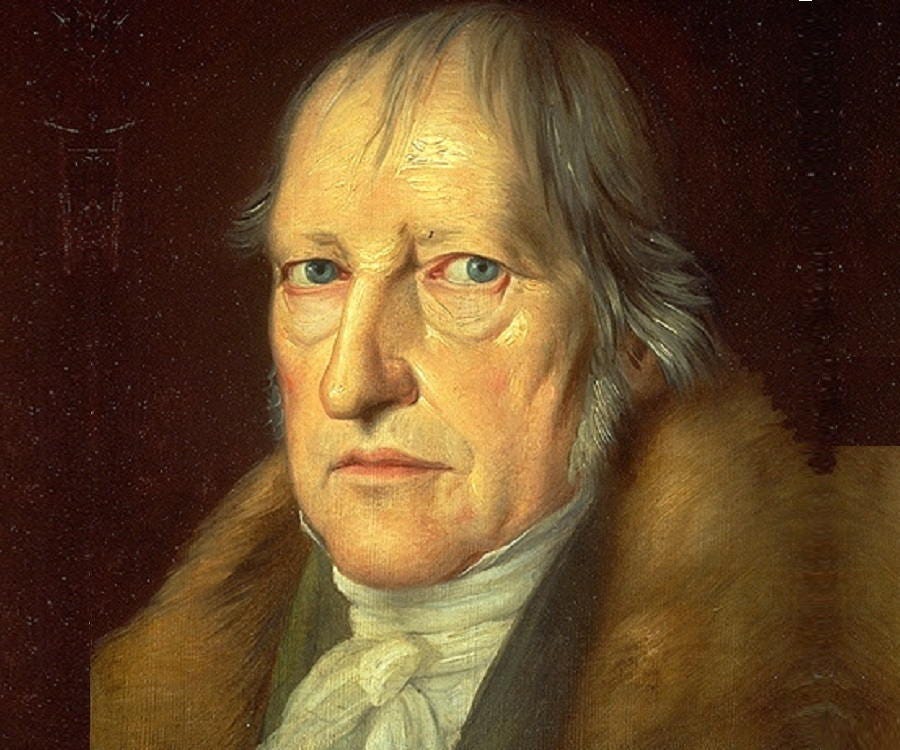
Hegel’s idea of the dialectic points in the same direction. He described history as a kind of back-and-forth (thesis, antithesis, then synthesis) where clashing forces eventually shape something new. If you map that onto technology, the thesis might be our analog past and the antithesis our digital present. The synthesis could be what we’re still trying to build: a world that uses technology to move forward without losing the tactile, reflective, human side of life.
Digital Brings New Horizons
Yet, not all is bleak. The digital age has democratized access to information and created opportunities unimaginable in analog times.
✅A young person today can learn quantum physics on YouTube, collaborate globally in virtual spaces, or build a career from their bedroom.
The analog world could never compete with such accessibility and speed.
✅For instance, consider how AI-driven tools have improved accessibility for disabled individuals, expanded educational opportunities in remote areas, and enhanced diagnostic accuracy in healthcare.
While these tools come with challenges, their capacity for good cannot be ignored. The question is not whether we abandon the digital but how we ensure its use aligns with human values.
✋However, AI’s potential for harm is also evident. For example, biased algorithms have led to discriminatory hiring practices, while automated systems have amplified misinformation during critical events. These and many other failures highlight the need for ethical oversight to ensure AI promotes inclusivity and fairness.
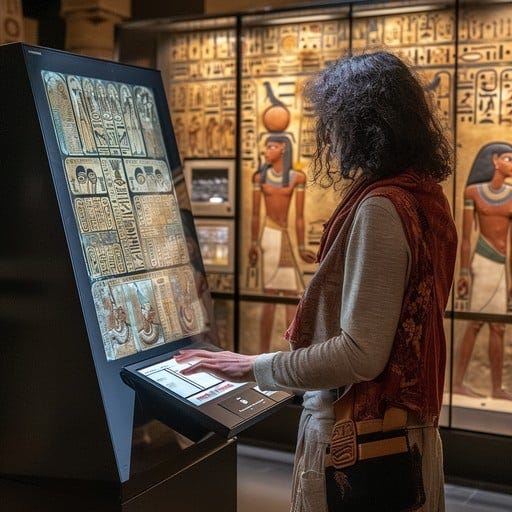
☮️Moreover, examples of successful analog/digital integration demonstrate how the two can coexist effectively. For instance, augmented reality has transformed museum visits, overlaying historical insights onto physical artifacts. Similarly, stylus-enabled tablets bring the feel of handwritten creativity to the digital realm, bridging the gap between old and new. These examples remind us that synthesis is not only possible but already happening.
Rekindling Analog
If we want future generations to thrive, we must balance digital prowess with analog grounding. How? Here are a couple of easy steps:
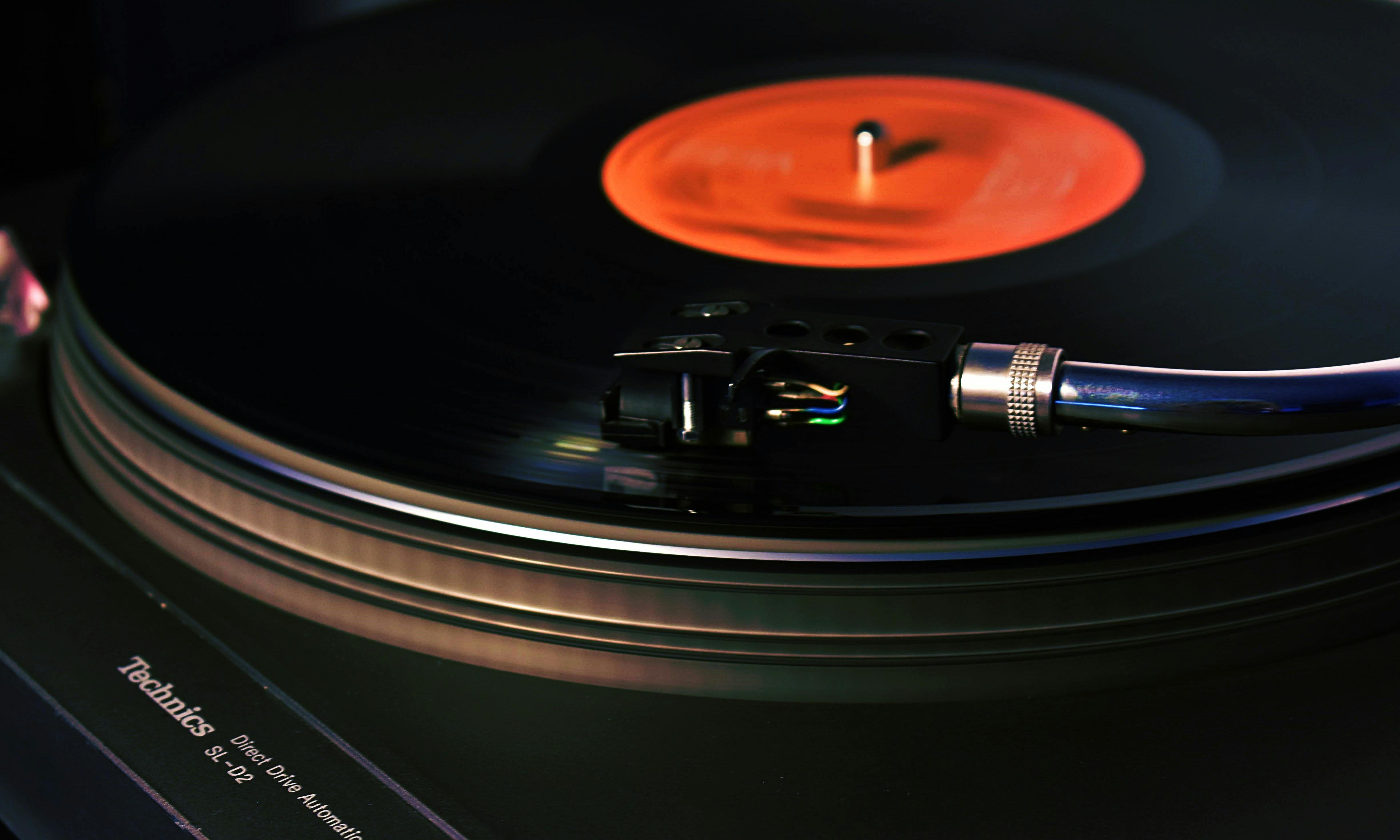
➡Preserve Analog Habits: Encourage activities like journaling, playing vinyl records, or developing film. These tactile experiences anchor us in reality. Preserve the written word, the physical touch, the ambient sound, and the tactile texture of analog life.
➡Teach Media Literacy: Help young people question digital content. Who owns the algorithm? What biases shape their feed? Teach them to question algorithms. Teach them to resist algorithms. Teach them to understand algorithms.
➡Foster Critical Thinking: Critical thinking has been eroding for two decades, its pace accelerating in the past five years. Revive practices like debate and long-form discussion. These analog skills resist the binary simplicity of digital logic. Teaching critical thinking is critical to thriving in a critically digital age.
➡Rediscover Nature: Analog isn’t just books and records. It’s the world outside. Hiking, gardening, or simply observing the seasons builds a connection no screen can replicate. These activities ground us in the real world, reminding us of the beauty in imperfection and the rhythm of nature.
➡Celebrate Hybrid Approaches: Look for ways technology can enhance analog experiences, such as augmented reality for museums or digital tools that support handwriting analysis in historical research. These intersections can remind us of the value in both worlds.
➡Advocate for Ethical AI Design: Developers and policymakers must prioritize creating AI systems that promote critical thinking, creativity, and inclusivity rather than replacing or diminishing these traits. Ensuring ethical AI requires input from diverse stakeholders (policymakers, technologists, ethicists, and affected communities) and establishing global standards for fairness and transparency.
Feel First, Think Second
Hope might be our most stubbornly human trait. The analog world gives us something technology will never quite capture: the messy, beautiful rawness of being alive. Yes, it’s messy. It’s raw. It’s real. We need to hold onto that, even as we charge ahead into a digital future. Some things just can’t be digitized.
♻Of course, both worlds leave their mark on the planet. Vinyl is made from petroleum, and digital life runs on energy-hungry data centers. If we want both to last, we’ll need to do better: greener data centers, cleaner ways of making the physical things we love.
As Professor Guérot reminds us, blending human intuition, creativity, and empathy with technology isn’t just idealistic—it’s the only way forward. Our future depends on it.
Digital life may chase perfection, but it will never capture the wild, beautiful chaos of being alive.
Reconnect with the tactile. The imperfect. The human. That’s where balance lives.⚖️
If this resonated with you, consider subscribing to receive more insights like these straight to your inbox. Together, we can continue the conversation and shape the future on our own terms.